

By Dominique Paradis, Cutting Solutions and Optimization Specialist at Machitech
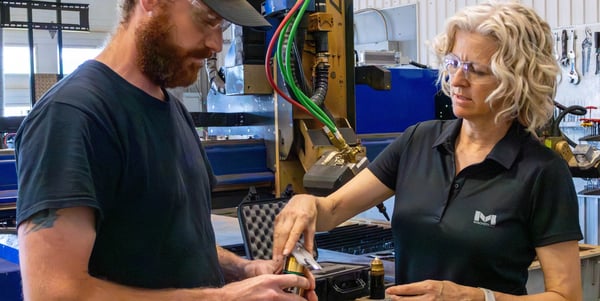
After 20 years working with Hypertherm plasma systems, I've seen just about every failure mode there is. And the vast majority of them were preventable. Your plasma system is one of the most critical pieces of equipment in your shop. It runs in an environment full of metal dust, heat, and electrical stress. Without a rigorous maintenance schedule, it won't deliver the cut quality, throughput, and uptime you paid for.
In this guide, I cover the essentials: why preventive maintenance (PM) is worth it, what breaks when you skip it, and the complete schedule of tasks for your Hypertherm system.
Why PM, In Brief
PM is the proactive approach: scheduled inspections and parts replacement based on run hours and the manufacturer's recommendations. The alternative, break fix repair, costs four to eight times more than planned PM. Three reasons I see come up over and over with customers:
- Domino effect. A failed coolant pump damages the torch head. A clogged filter cooks the heat exchanger. You end up replacing what you
could have saved. - Unplanned costs. Expedited shipping, after hours labor, emergency service calls.
- Downtime. Lost production, idle operators, missed customer commitments. Often the biggest cost, and it never shows up on the repair invoice.
On top of that: a poorly maintained system cuts worse, burns through consumables faster, and doesn't hit its rated speeds. You pay every day, not just on the day it breaks.
Two Failure Modes to Avoid
In the field, two causes show up almost every time a system goes down.
Metal dust inside the equipment. It accumulates in the power supply cabinet, coats the fans, and reduces airflow across the heat sinks. Fans slow down, the system overheats and either derates or shuts down. In the torch, it prevents O rings from sealing. In the coolant loop, it wears out the pump and fouls the flow sensors.
Consumables run to failure. They don't just stop cutting. They melt. Copper fragments end up in the coolant system and can prevents the check valve from operating correctly. A $30 set of consumables left in too long can cause $3,000 in collateral damage. I've seen that bill too many times.
Components to Watch
| Component | Replacement Schedule |
|---|---|
| Main torch body | Annually (Annual PM Kit). Bullet plugs and rear O rings during the year. |
| Torch leads | Every 1 to 2 years |
| Coolant pump and motor | Regular flushing and filter changes (non negotiable) |
| Cooling fans | Blow out monthly, replace every 3 years |
| Pilot arc relay | 500 to 1,000 hours (electronics PM kit) |
| Main contactor | 500 to 1,000 hours (electronics PM kit) |
Maintenance Schedule
| Schedule | Tasks |
|---|---|
| Daily (before startup) | Inlet pressures (gas and air); air filters; coolant level and condition; lubricate O rings; water tube and torch; LED indicators and faults; torch and consumable installation. |
| Weekly | Hoses and torch leads (wear, kinks, damage); gas leak test; coolant flow and level. |
| Monthly | Clean inside the power supply (vacuum the "dirty" side, then dry compressed air); coolant system; main contactor; pilot arc relay; coolant flow; gas line connections, hoses, cables, ground connections, table to workpiece connection. |
| Every 3 months (Powermax) | Power cord and plug; trigger and torch body; torch lead; system labels. |
| Every 6 months (Powermax) | Clean the power supply; gas filter / water separator bowl and element; external air filter (replacement element part #011092). |
| At 500 arc hours (XPR, HPRXD, MAXPRO200) | Torch rebuild. Air and coolant filters, bullet plugs, O rings and lubricant, water tubes, quick disconnect components. |
| At 1,000 arc hours (XPR, HPRXD) | Electronics PM kit. Main contactor, pilot arc relay, quick disconnect components. |
| Annually | Annual PM Kit (includes torch body); full system inspection by a qualified technician; coolant system flush and replacement. |
Torch rebuild kits are available with or without coolant. Electronics PM kits are voltage specific (200 to 240V or 380 to 600V) and cost less than buying the parts separately.
Watch Your Consumable Usage
When a customer calls me because the system isn't cutting like it used to, the first question I ask is: "How's your consumable usage looking?" A sudden jump in nozzle, electrode, swirl ring, or shield usage is often the earliest signal that something is wrong, well before an error code shows up. Three possible causes:
- Training. Operators are changing parts too aggressively.
- System. Cut quality is degrading and they're compensating.
- PM overdue. A component is in early failure.
Hypertherm's consumable usage tool compares your actual usage against recommended frequencies and quantifies overuse in dollars and cost per foot of cutting.
PM Goes Beyond Parts: The Machitech Approach
Over the years, I've come to understand that an effective PM program doesn't stop at swapping parts on a calendar. Three often overlooked elements make a real difference in your system's performance:
- Operator training. Most cut quality and consumable overuse problems come from habits picked up on the shop floor. A well trained operator recognizes wear signs before they turn into failures, changes consumables at the right time, and dials in their parameters correctly for the material.
- Table condition assessment. Your plasma is only as good as the table it rides on. Level, rail condition, cutting bed flatness, fume extraction system: all of these factors directly affect cut quality and system wear. A periodic assessment lets you correct mechanical issues before they cause cascading failures.
- Process optimization. Hypertherm regularly releases new technologies, software updates, and process improvements that apply to your existing system. Staying informed about these can improve your throughput, your quality, or your cost per foot without having to invest in new equipment.
For our existing customers, I offer a free visit covering all three areas. I come to your shop to assess the condition of your system and table, train your operators on best practices, and walk you through the process optimizations available for your model. It's an opportunity to turn your PM from a simple parts replacement exercise into a real continuous improvement program.
Bottom Line
After two decades in this field, I can tell you with confidence: plasma system failure modes are predictable and the maintenance schedule is clear. A disciplined PM program means less downtime, longer consumable life, better cut quality, no emergency repairs, and a longer service life for the whole system.
Pull up your maintenance log and check your arc hours. If you're not sure which kit, what cadence, or what to watch for, get in touch. I can build a PM plan with you that fits your machine and your duty cycle.
Don't wait for the breakdown. The cheapest repair is the one you never had to make.
Need help with your maintenance?
Machitech can provide a shop visit covering all three areas. Our team comes to your facility to assess the condition of your plasma power supply, train your operators on maintenance best practices, and walk you through the process optimizations available for your model. It's an opportunity to turn your PM from a simple parts replacement exercise into a real continuous improvement program. Contact us for more information.