
Every AI model you've heard of, ChatGPT, Gemini, Grok, runs on servers inside massive data centers. Those data centers run hot. Keeping them cool requires extensive piping infrastructure.
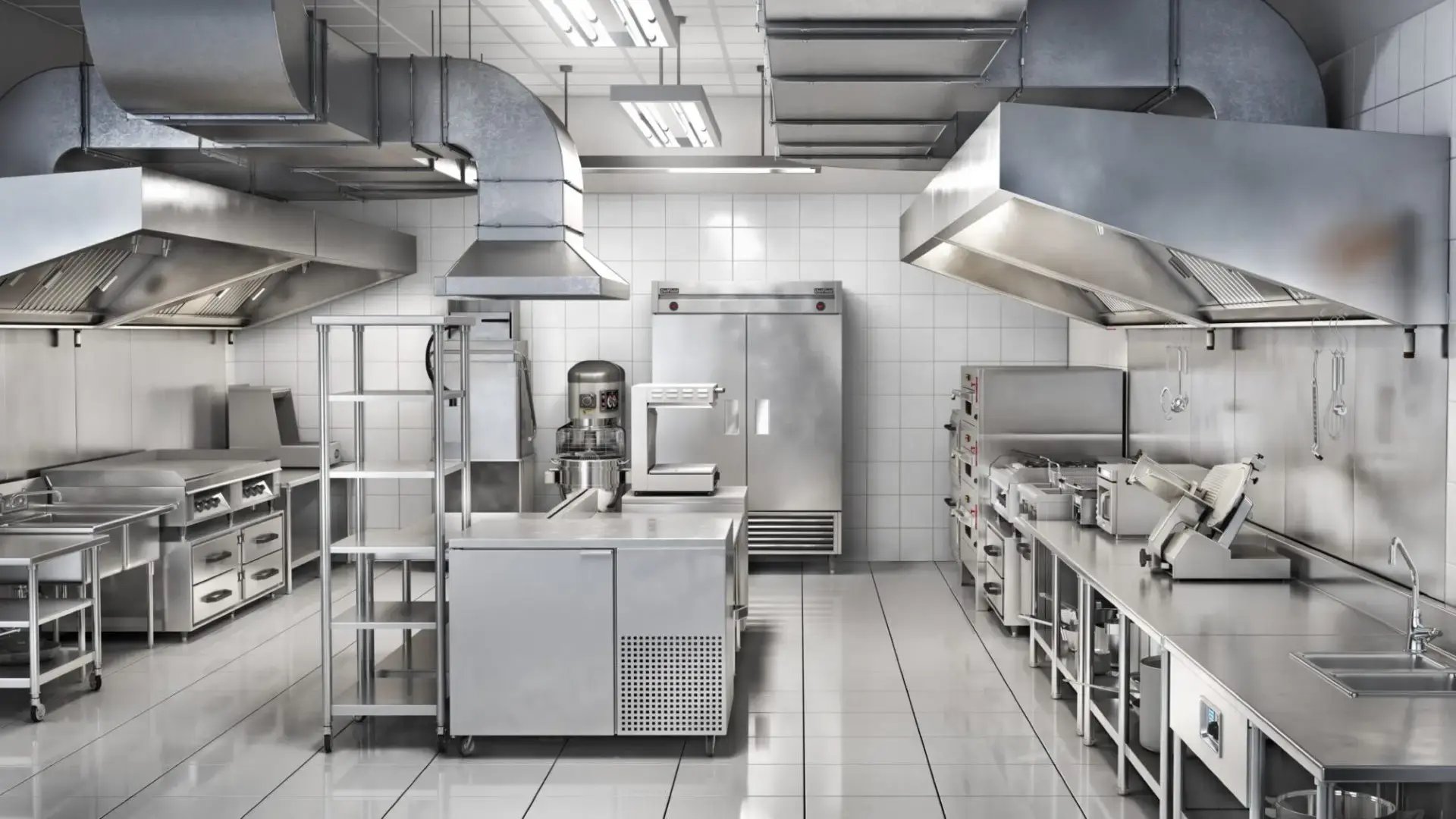
Cooling loops. Chilled water systems. HVAC distribution. Liquid cooling systems tied into facility water networks. GPU power has moved from roughly 700W class accelerators to around 1,000W class systems and continues to increase, driving much higher rack densities and increasing the need for advanced cooling.
There are currently over 770 hyperscale data center projects in various stages of planning, construction, or fit out worldwide. Each one is a highly infrastructure intensive build, with significant demand for piping systems from the ground up.
The demand is real and accelerating.
One industry forecast estimates the data center cooling market will grow from about $21 billion in 2026 to more than $54 billion by 2034. January 2026 alone saw $25.2 billion in U.S. data center construction starts, the highest monthly figure ever recorded.
Across the industry, many fabricators report a growing share of their workload shifting toward data center related projects. The scale of piping demand is rising quickly, driven by the speed and volume of new construction.
The bottleneck is not material. It is fabrication.
Microsoft, Amazon, Google, and Meta are projected to spend roughly $650 billion combined on infrastructure in 2026, well above 2025 levels. Amazon is estimated to be around the $200 billion range, with Google between $175 and $185 billion. These companies are acquiring land, building facilities, and pushing to bring capacity online as fast as possible.
That urgency is reshaping expectations for suppliers.
Compared with traditional sectors like oil and gas, where projects often move through long approval and procurement cycles, data center construction is moving on compressed timelines and placing a premium on delivery certainty.
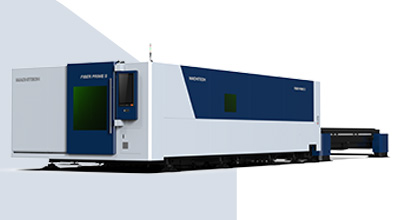
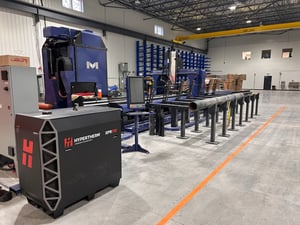
Shops that are keeping up share a few things in common. Their pipe goes from raw stock to finished cut in one automated pass, with no manual layout or secondary grinding. Weld prep bevels come off the machine ready to fit. Saddle cuts, holes, and slots are handled in the same cycle as the cut to length. When a detailer sends a file from Tekla or Revit, it flows directly to the machine with no re entry and no transcription errors.
When a project calls for 2 inch process lines in the morning and 36 inch cooling mains in the afternoon, the changeover takes minutes, not hours.
The shops that cannot keep up are already falling behind.
Data center general contractors are increasingly prioritizing throughput and turnaround time alongside price. If your pipe shop is still building its capacity around manual methods, the window to get ahead of this wave is now, before backlog builds and capacity is fully committed.